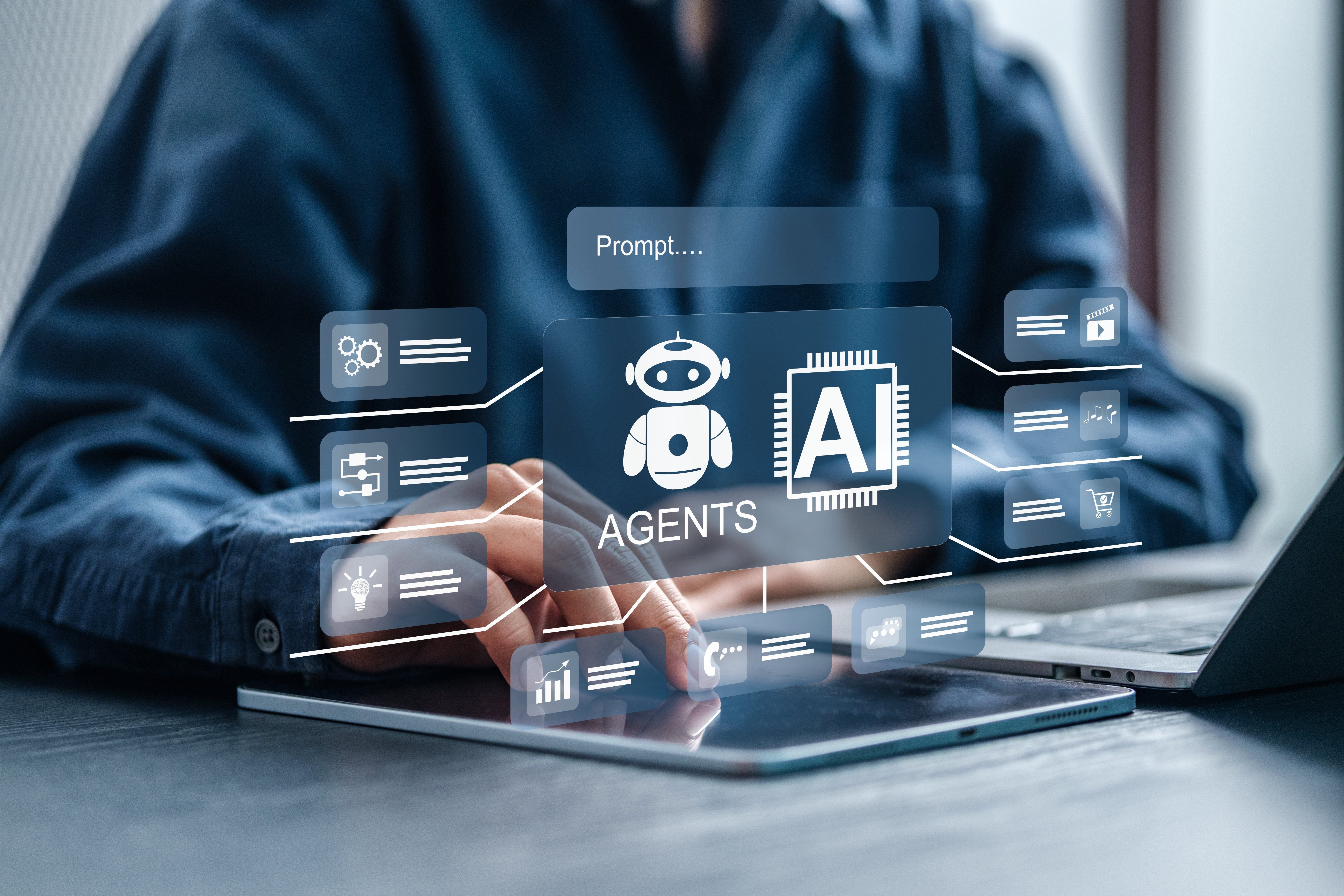
Explore how agentic AI enables hyper-personalised, seamless customer experiences across every digital touchpoint.
“Retail is detail” has long been an industry catchphrase. Its insight is that consumers notice small elements of their shopping experience, and these moments often decide whether a purchase happens.
Today, most industries must deliver outstanding customer experiences (CX) as they operate and sell online. Whether it’s a financial services firm providing insurance, a manufacturing business selling direct, or an automotive maker showcasing vehicles, CX is a top priority.
What businesses may overlook is that small CX moments increasingly rely on their digital networks. Quality, speed, and security remain essential, but integration and the ability to turn data into insights determine how personalised experiences feel. When these align across the end-to-end customer journey, conversion, and loyalty rise.
How infrastructure drives experience
Hidden beneath every customer touch, there is a technology stack supporting it – from the CX platform to the digital infrastructure. When networks are optimised, secure data is accessible, tools are integrated, and companies deliver fast, personalised interactions. But all of these tasks can be difficult to achieve.
Amit Mehrotra, Vice President and Head of the United Kingdom and Ireland region at Tata Communications, says: “For many organisations, the biggest blocker to good CX is the complexity and fragmentation of their tech stack. Customer data sits in siloed systems that don’t talk to each other. We find that organisations need help streamlining their CX IT environments to set them up for success.”
Breaking down internal fragmentation is vital. A unified experience across channels requires an integrated and unified CX technology platform.
Integration is a particular problem for companies operating in the U.K. and Europe, where multiple languages, different regulatory concerns, and overlapping tools can quickly create IT complexity. But done right, joined-up infrastructure can help organisations execute hyper-personalised campaigns to drive exceptional results.
Nick Reeks, director of IT at Tata Steel says: “Organisations need more data for longer periods of time – and it must be traceable across the whole supply chain. Artificial intelligence can help connect the dots, but only if the data is structured properly, with quality controls and guardrails.”
Orchestrating with AI
With solid tech foundations in place, companies are then better placed to innovate and enhance their CX. Deploying AI-based tools helps improve personalisation, speed, scale, and reliability. Two effective methods are to utilise AI in marketing orchestration and to deploy AI agents to automate key steps in the marketing process.
“Agentic AI can deliver ‘next best actions’ with considerably greater accuracy – and at a far greater speed – than was possible just a few years ago,” says Mehrotra. “With our Interaction Fabric, we connect back-office employees, systems, and data with front-office customer support – whether that’s agents, bots, or self-service channels – so that CX is seamless across every customer touchpoint and channel.”
Yet, agentic AI can go even further. At a tactical level, it can segment audiences based on customer data, generate tailored content, decide the most effective delivery channel and timing, and then analyse results using conversational analytics.
These are not fixed, deterministic journeys; the AI solution or technology can continuously adapt in real time to orchestrate dynamic, goal-driven interactions. For example, a retailer might set a target to sell 1,000 units of a product. The AI agent can identify the right customers, craft personalised offers, and deliver them at the optimal moment across email, SMS or social platforms – maximising sales while minimising opt-outs.
AI orchestration in CX scales this intelligence across the enterprise. In a marketing use case, instead of optimising a single campaign, orchestration uses the power of AI to crunch huge quantities of data to build rich customer personas, generate multiple iterations of personalised offers, and coordinate journeys across many channels and regions.
Orchestration ensures consistency of experience at scale, even in complex markets with diverse languages, regulations, and customer behaviors. Crucially, a human is in control throughout, steering the process by setting goals, approving AI outputs and ensuring campaigns stay creative, compliant, and on brand.
Amit Kapoor, Vice President and Head of Europe at Tata Communications, says: “Thanks to AI, content and messages can be targeted to be more personalised at greater speed and accuracy – all delivered with the assurance of global reach and rigorous compliance with local data regulations. This is transformative for companies and their marketing teams, ensuring they can innovate at scale without compromising on trust, compliance, or security. And the impact on CX is huge.”
The Hyper-personalisation imperative
The development of agentic AI is already transforming how companies serve their customers.
Bajaj Auto Credit Limited (BACL) worked with Tata Communications to launch a secure, compliant digital lending platform in just 90 days. Delivering 30% month-on-month growth in platform usage and 12-15% cost savings, while ensuring faster, more seamless customer experiences and meeting strict regulatory requirements.
“The biggest IT barriers to customer experience are legacy systems, siloed data and inconsistent platforms. By adopting cloud-smart strategies and a unified service catalogue, we have been able to deliver more predictable, high-quality services,” says Ravi Rao, Cloud Operations Manager, EMEA Infrastructure, Ricoh Europe.
By unifying CX platforms, network connectivity, and cloud environments, Tata Communications creates an end-to-end system without third-party dependencies. The result is AI-powered customer experiences that are not only seamless, but also efficient, compliant and consistent worldwide. Reimagine your organisation’s customer experience. Learn more here.