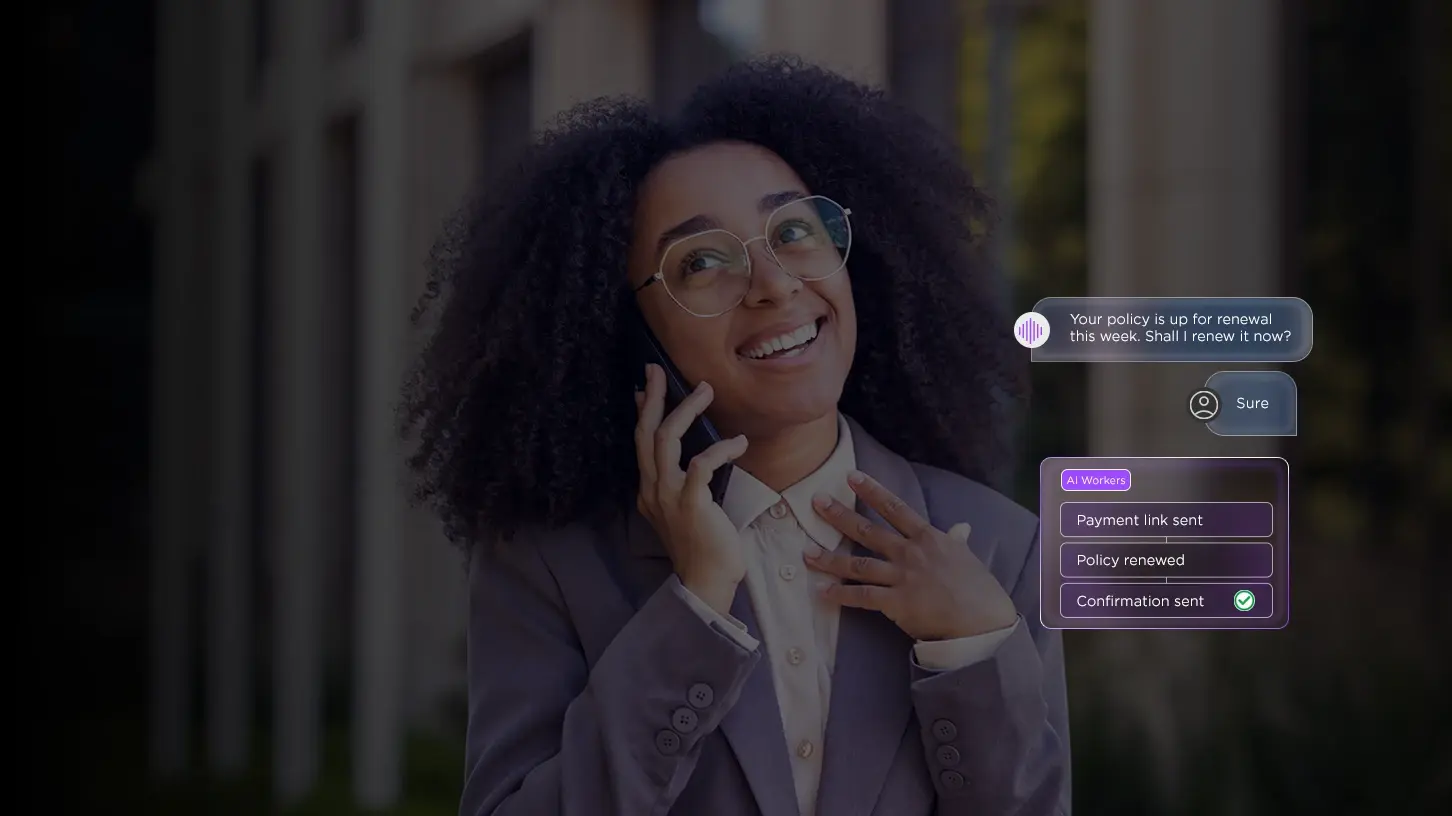
Marketing has always been about reaching the right customer, with the right message, at the right time. But in today’s hyper-digital, multi-channel interaction landscape, this has become more complex and fragmented than ever. Traditional automation tools follow static rules, often failing to keep up with customer behaviour that shifts in real time.
That’s where Agentic AI steps in. Used right, it can transform marketing from rigid workflows into dynamic, autonomous decision making & engagement.
Why Marketers Can’t Ignore Agentic AI Anymore
Unlike rule-based automation, Agentic AI can sense, decide, and act across customer touchpoints. It’s not just about “if X, then Y”; it’s about continuously analysing signals, predicting intent, and adjusting strategies on the fly.
- McKinsey highlights that 71% of consumers expect personalized interactions, and 76% become frustrated when personalization is lacking.
- Salesforce research shows that 78% of marketers struggle with delivering real-time personalisation, something Agentic AI directly solves.
Think of AI agents as a digital marketing team that never sleeps, monitoring data streams, optimising campaigns, and driving defined outcomes - all autonomously.
Inside the Engine Room: How Agentic AI Works for Marketers
Agentic AI combines three layers of intelligence to deliver value:
-
Perception: Continuously monitors customer signals across web, app, advertisements, and social media.
-
Decisioning: Uses AI models to predict intent, score leads and decide next-best-actions.
-
Action: Executes across marketing channels instantly, without waiting for manual intervention. And continuously learning from those actions.
"This means marketers no longer just automate tasks, they deploy AI teammates that adapt, optimise, and engage in real time. The time to start adopting is now: customers expect personalisation and speed, and early adopters will enjoy stronger brand recall, higher conversions, and competitive advantage."
From Cart Abandonment to Campaign Wins: Real-World Use Cases
Agentic AI is already delivering measurable impact across the marketing funnel. Here are a few scenarios that show how it translates into real business outcomes:
-
Hyper-Personalised Journeys
Imagine a customer browsing your product but abandoning their cart. Instead of a generic follow-up email, an Agentic AI agent evaluates the user’s purchase history, location, and even sentiment from past interactions, then decides whether to send a discount code via WhatsApp or a reminder via email.
-
Real-Time Campaign Optimisation
In a live campaign, an AI agent notices that engagement rates are dropping in one geography. It instantly reallocates budget to higher-performing regions and tweaks advertsement creatives for the lagging market, without waiting for manual intervention.
-
Cross-Channel Engagement
An AI agent ensures that when customers interact with a brand on the web, mobile app, and contact centre, they receive a consistent, contextual journey rather than disconnected messages.
Your Everyday AI Agents for Marketing Success
Agentic AI isn’t abstract, it shows up as practical agents that marketers can use daily. Here are some that can fit right into everyday workflows:
-
Campaign Orchestration Agent
Handles email, SMS, WhatsApp, ads, and push notifications, choosing the right time and channel so you don’t have to.
-
Content Creation Agent
Drafts ad copy, social posts, or product blurbs in seconds. For example, instead of waiting days for new campaign assets, marketers can generate variations instantly and test them in real-time.
-
Insights Agent
Surfaces key campaign metrics in real time. Instead of combing through dashboards, you get alerts like: “Click-through rates dropped 15% on Facebook ads in the last hour, suggest pausing spend.”
-
Personalisation Agent
Customises offers and creatives at an individual level. For example, it might send a premium upsell offer to a repeat buyer but a discount coupon to a first-timer.
-
Lead Nurture Agent
Scores leads automatically and nudges prospects with personalised reminders, so sales only see warm, high-quality opportunities.
-
Churn Prevention Agent
Spots early signs of disengagement, like reduced app use, and triggers tailored retention tactics such as loyalty perks or feedback surveys.
-
Creative Testing Agent
Automates A/B and multivariate testing, running hundreds of creative experiments in parallel and instantly surfacing the best-performing ones.
Together, these agents function like a virtual marketing squad, taking on repetitive tasks and freeing marketers to focus on the big-picture strategy and KPIs.
Also Read: Redefining Customer Experience in the Age of AI

How to Build These Agents
The good news is marketers don’t need to start from scratch; these agents can be built step by step using existing easy-to-use AI and mar tech stacks available in the market. Here’s how:
-
Define the Use Case
Start with the most significant friction point—e.g., lead drop-offs, campaign optimisation, or churn. The agent should solve one clear problem first.
-
Leverage Data Pipelines
Connect customer data from CRM, CDP, analytics, and engagement tools so the agent has real-time context to work with.
-
Select or Train the Model
Use a fine-tuned LLM or specialised AI model (e.g., for language, intent detection, or recommendation) that matches the use case.
-
Set Rules + Autonomy Boundaries
Give the agent freedom to act (send reminders, adjust bids, generate creatives) but set guardrails to avoid overreach.
-
Integrate with Martech Tools
Plug the agent into existing channels, email automation, ad platforms, WhatsApp APIs, to act within live campaigns.
-
Test and Iterate
Start with a pilot, measure the uplift, and gradually expand to more channels and use cases.
The Bigger Picture
Agentic AI is reshaping marketing automation by blending autonomy with intelligence. Instead of static journeys, marketers can design adaptive systems that respond to each customer’s behaviour in real time. This means less firefighting, more strategic focus, and better CX outcomes.
In the age of infinite choices, the brands that thrive will be those that can build trust, relevance, and speed at scale. Agentic AI isn’t just the future of marketing automation; it’s the future of customer experience.
If you’re ready to explore how to bring these AI agents into your marketing stack, check out our CX Platform solutions or contact us for a complimentary discovery workshop.