


In today’s fast-evolving world of Artificial Intelligence (AI) and Machine Learning (ML), speed and efficiency matter more than ever. Training large language models...
How GPU as a Service powers AI, Machine Learning & Deep Learning
What is GPU as a Service (GPUaaS)?
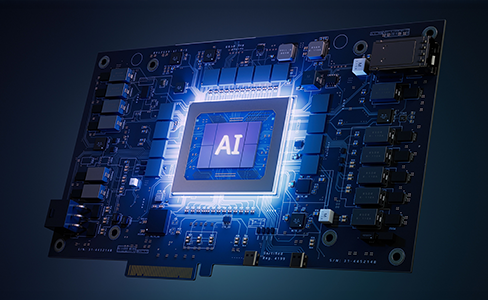
GPU as a Service (GPUaaS) is a modern computing solution that provides on-demand access to powerful Graphics Processing Units (GPUs) via the cloud. Instead of investing heavily in costly hardware and infrastructure, organisations can now tap into GPU resources whenever needed, paying only for what they use. This model not only saves costs but also offers unmatched flexibility, making it ideal for businesses ranging from emerging tech startups to large enterprises and government institutions.
Tata Communications AI Cloud brings this concept to life with its GPUaaS solution. It offers businesses a secure, scalable, and performance-driven environment to accelerate AI, machine learning (ML), and deep learning (DL) projects. By providing access to NVIDIA-certified GPUs such as the H100 and L40S, Tata Communications ensures enterprises get the best infrastructure without the burden of hardware maintenance or capital expense.
Why AI and ML workloads need GPUs
AI and ML tasks involve massive calculations, particularly during training phases. While traditional CPUs can handle basic operations, they fall short when managing highly parallel tasks such as neural network training or matrix operations. This is where GPUs come in.
GPUs, unlike CPUs, are built with thousands of smaller cores designed for parallel processing. This allows them to handle multiple tasks simultaneously, drastically reducing the time needed for training and inference. In simple terms, if you are running a model with vast datasets, using a GPU for AI and GPU for machine learning is not just a choice, it’s a necessity.
How GPUaaS supports AI, ML, and DL pipelines
Tata Communications’ Vayu AI Cloud GPU-as-a-Service covers the full lifecycle of AI development. Let’s explore how it fits into each stage of a typical AI/ML/DL pipeline.
Data preprocessing and feature engineering
Before training any model, data must be cleaned, transformed, and structured. This step is often computationally demanding, especially with large datasets. With GPUaaS, parallel processing ensures that massive datasets are processed efficiently, enabling faster data exploration and transformation. Tata Communications enhances this stage with scalable storage systems, including high-speed parallel file systems that deliver up to 105 GB/s read speed and 75 GB/s write speed.
Model training and tuning
This is the most compute-intensive stage. Training models like deep neural networks or large language models (LLMs) can take days on CPUs but only hours on AI GPUs. With GPUaaS, users can access NVIDIA H100 and L40S GPUs. These are considered the best GPUs for deep learning and AI training, which accelerate training and offer peak floating-point performance.
Tata Communications provides a user-friendly TCx portal to provision GPUs easily, with pre-installed frameworks like CUDA, cuDNN, NCCL, and NVIDIA AI Suite. This streamlines the setup and allows developers to focus on optimising models, rather than infrastructure.
Inference and real-time deployment
Once a model is trained, it must be deployed to make predictions or classify data in real-time. Inference needs to be both fast and reliable. GPUaaS supports real-time deployment with low latency, enabling high-speed predictions on streaming data.
Tata’s infrastructure includes secure and efficient networking options, such as BYON (Bring Your Own Network), multi-cloud connectivity, and private site-to-site links, making it suitable for applications with strict latency requirements like autonomous systems and financial trading platforms.
Key benefits of using GPUaaS for AI & ML projects
1. Cost efficiency
By eliminating the need to purchase and maintain physical GPUs, businesses can reduce capital expenditures. Tata’s flexible pricing model such as pay-per-use or reserved instances helps control costs while scaling operations as needed.
2. Scalability and flexibility
GPUaaS lets you scale resources up or down depending on the workload. This is ideal for AI teams working on projects with fluctuating demands. With Tata Communications, scaling doesn’t just mean more power; it also means better storage, secure access, and performance consistency.
3. High-performance infrastructure
With access to top-tier GPUs like H100 and L40S, developers get the best infrastructure to run demanding models. Combined with high-speed storage, parallel file systems, and multi-cloud support, this is an end-to-end solution for GPU ML and DL needs.
4. Ease of use
Tata’s TCx portal allows for quick provisioning and includes pre-configured tools, frameworks, and libraries, making the platform easy to use even for mid-sized teams with limited DevOps support.
5. Security and connectivity
The service supports stateful firewalling, IPSec tunnels, FQDN filtering, and fine-grained ingress and egress controls. This ensures that AI data remains secure while enabling safe and seamless integration with cloud providers and on-premise systems.
For a deeper look at how on-demand GPUs are making AI more accessible, explore our guide on GPUaaS as the engine behind AI transformation.
Use cases of GPUaaS in AI and Deep Learning
Computer vision
Computer vision applications, such as facial recognition, object detection, and image classification, require rapid processing of high-resolution images. Using GPU machines for deep learning, companies can process massive image datasets in parallel, improving both speed and accuracy.
Natural Language Processing (NLP)
NLP tasks like language translation, sentiment analysis, and chatbots involve processing huge text corpora. LLMs and transformers need the best GPU for AI training to manage large vocabularies and context-based predictions. Tata’s GPUaaS helps deploy these models at scale with speed and precision.
Generative AI and LLMs
Training large language models or deploying generative AI tools (such as text or image generation) demands massive GPU capacity. With support for distributed training, orchestration tools like Kubernetes and SLURM, and efficient parallel storage, Tata’s GPUaaS makes it easier to handle these heavy-duty workloads.
Predictive analytics
For sectors like finance, healthcare, and retail, predicting future trends or customer behaviour can add immense value. Running predictive models on GPUaaS allows faster insights, better model tuning, and more accurate forecasting.
Autonomous systems
From self-driving cars to industrial robots, autonomous systems rely heavily on low-latency processing. Tata Communications’ GPUaaS provides secure, real-time deployment with reliable infrastructure, ensuring consistent performance even at the edge.
Get the full technical specifications on our GPU-as-a-Service offering and learn how Vayu AI Cloud delivers on-demand GPU power for scalable AI innovation.
Conclusion
In today’s data-centric environment, the demand for faster, smarter, and more efficient computing is growing every day. GPUaaS is no longer just a convenience—it’s a necessity. With Tata Communications Vayu AI Cloud, businesses can unlock the full power of GPU for AI, GPU for machine learning, and GPU for deep learning without investing in physical infrastructure.
Tata Communications' solution stands out not just because of its performance or pricing, but because it brings together everything a modern AI or ML team needs: top-tier GPUs, scalable storage, secure networking, and seamless integration. Whether you’re training an LLM, deploying a vision model, or building predictive tools, Tata Communications offers a future-ready platform that’s built for real-world AI success. By leveraging Tata Communications Vayu AI Cloud’s GPUaaS, businesses can not only meet their AI ambitions but do so with unmatched efficiency, security, and scalability.
Contact us today for AI Cloud Solutions.
FAQs on GPU for AI
Can GPUaaS handle large-scale model training for deep learning?
Yes, with high-end GPUs like the NVIDIA H100 and L40S, Tata’s GPUaaS supports distributed training across multiple GPUs. It also provides orchestration tools like SLURM and Kubernetes, ideal for handling large deep learning models.
Which AI/ML tasks benefit most from GPUaaS?
GPUaaS is best suited for compute-intensive tasks such as image classification, natural language processing, recommendation systems, and large-scale simulations. It greatly accelerates model training, fine-tuning, and inference.
Can I run LLMs or generative AI models using GPUaaS platforms?
Absolutely. Tata Communications’ GPUaaS is built to support LLMs and generative AI models with the necessary computational resources, parallel storage systems, and low-latency deployment options.
Related Blogs
Unleash peak AI performance with dedicated BareMetal GPUs
Related Blogs
Unleash peak AI performance with dedicated BareMetal GPUs
Explore other Blogs
What is GPU as a Service (GPUaaS)? GPU as a Service (GPUaaS) is a cloud-based solution that offers high-performance Graphics Processing Units (GPUs) to users on demand....
In today’s world of advanced Artificial Intelligence (AI) and Machine Learning (ML), managing large-scale computing workloads efficiently is a critical challenge for...
What’s next?
Experience our solutions
Engage with interactive demos, insightful surveys, and calculators to uncover how our solutions fit your needs.
Exclusively for You
Get exclusive insights on the Tata Communications Digital Fabric and other platforms and solutions.