


Artificial Intelligence and High-Performance Computing (HPC) are shaping the next wave of digital transformation. From training massive language models to running...
GPU cloud computing explained: Costs, benefits & challenges
What is GPU cloud computing?
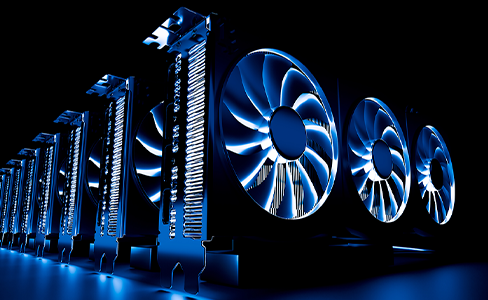
GPU Cloud Computing refers to a service model where powerful GPU (Graphics Processing Unit) resources are made available over the cloud. Instead of purchasing and managing expensive physical GPU machines, businesses and developers can rent GPU power on demand. This is particularly useful for workloads that require parallel processing, such as AI training, machine learning, deep learning, 3D rendering, scientific computing, and data analytics.
Tata Communications has entered this space with its Vayu AI Cloud GPU-as-a-Service (GPUaaS) offering, enabling organisations to use cloud-based GPU infrastructure that meets their exact requirements. Whether you're training large language models, analysing real-time data at the edge, or running simulations, this solution helps you access the necessary GPU power without long-term capital commitments.
How GPU cloud computing works
When a user subscribes to GPU cloud hosting, they are essentially renting virtual machines that are equipped with dedicated or shared GPUs. These VMs can be spun up quickly using a cloud dashboard or API, and shut down when the task is complete.
Tata Communications’ GPU Cloud works on this model but with several advanced features that make it more robust. You can choose from NVIDIA H100 or L40S GPUs, configured with 224 vCPUs and up to 1 TB of RAM. With pre-installed tools like CUDA, cuDNN, and NVIDIA AI Suite, Tata’s Vayu AI Cloud saves valuable setup time.
The platform also offers:
- Simplified provisioning via the TCx portal
- Reserved or pay-per-use pricing
- High-speed object and parallel file storage
- Orchestration tools (Kubernetes and SLURM)
- Private networking, VPN, and BYON support
This ensures that businesses get an end-to-end environment for high-performance GPU-based workloads.
Benefits of GPU in cloud computing
Using a GPU in cloud computing offers a wide range of advantages:
- No upfront hardware costs: Businesses don’t have to invest in expensive GPUs or manage on-premise infrastructure.
- On-demand scalability: Whether you're training one model or fifty, cloud-based GPU services let you scale instantly.
- Performance optimisation: Tata’s platform provides NVIDIA-certified GPUs, with up to 105 GB/s read and 75 GB/s write speeds, delivering performance essential for large-scale AI models.
- Flexible pricing models: You can choose between pay-as-you-go (ideal for temporary needs) or reserved instances (suitable for long-term projects), making the GPU cloud pricing more predictable and manageable.
- Security and control: With firewalls, FQDN filtering, ingress and egress control, and NAT gateway options, Tata ensures your data and access points remain fully secure.
Global availability and access
Another key strength of GPU cloud computing is its accessibility. Tata Communications leverages its global infrastructure to ensure that high-performance GPU services are available worldwide. No matter where your development or analytics teams are located, they can tap into GPU cloud hosting with low latency and consistent performance.
Multi-cloud and hybrid setups are also supported, allowing seamless integration between Tata’s cloud, on-premise environments, and third-party cloud providers.
GPU cloud pricing overview
Understanding GPU cloud computing price structures is essential for budgeting.
Tata Communications offers two pricing options:
- Pay-per-use: Charges are based on hourly GPU usage. Ideal for startups or teams working on experimental or short-term projects.
- Reserved instances: You can commit to a fixed amount of GPU resources over 6, 12, or 36 months. This gives cost savings and predictable monthly expenses for larger or continuous AI workloads.
Additional charges may include storage (per GB/month), internet data connectivity (1 Mbps to 10 Gbps), and network features like firewall or VPN setups. However, Tata eliminates hidden costs like ingress/egress charges in many cases, helping teams manage their budgets more effectively.
For a deeper look at how on-demand GPUs are making AI more accessible, explore our guide on GPUaaS as the engine behind AI transformation.
Common use cases of GPU cloud hosting
Cloud-based GPU platforms are powering a wide range of applications across industries:
- AI and Machine Learning: Speed up training and inference of ML/DL models, including LLMs and Generative AI.
- Big data analytics: Quickly process massive datasets for business intelligence and forecasting.
- Computer vision: Real-time image recognition, autonomous vehicle data processing, and surveillance.
- Healthcare: Genomic data analysis, medical imaging, and AI diagnostics.
- Media and entertainment: Video rendering, CGI processing, and animation.
- Finance: Fraud detection, algorithmic trading, and risk modelling.
Tata Communications stands out with its ability to support orchestration engines, manage parallel training, and offer seamless connectivity, all within a secure and scalable ecosystem.
Challenges in GPU cloud computing
While GPU cloud computing offers many benefits, it also comes with a few challenges that must be managed carefully.
Cost management and budgeting
The flexibility of pay-per-use pricing can sometimes lead to unpredictable costs, especially if resources are not de-provisioned after use. Tata mitigates this with detailed billing dashboards and reserved pricing options for predictable long-term planning.
Data security and compliance
Working with sensitive data in the cloud raises concerns around security and regulatory compliance. Tata Communications addresses this through:
- Stateful firewalls
- BYON (Bring Your Own Network) options
- IPSec tunnels and VPNs
- Fine-grained data ingress/egress controls
Limited availability of high-end GPUs
As demand increases, access to premium GPUs like H100 or L40S can become competitive. Tata’s infrastructure ensures availability through dedicated clusters and advanced reservation systems, helping you lock in the resources when you need them the most.
Final thoughts
GPU cloud computing has become a foundational component for modern innovation, especially in AI, machine learning, and data science. As organisations look to deploy more intelligent and automated systems, the need for fast, scalable, and affordable GPU resources is only going to grow.
Tata Communications Vayu AI Cloud is addressing this demand with a well-rounded, secure, and performance-oriented GPU-as-a-Service platform. By offering flexibility in pricing, robust infrastructure, and global availability, it allows businesses to focus on development rather than hardware.
Whether you're a data scientist training an LLM, a fintech firm running real-time predictions, or a healthcare provider managing AI diagnostics, Tata’s GPU cloud hosting ensures you get the computing power you need, when you need it with complete peace of mind.
With GPU in cloud computing evolving rapidly, platforms like Tata Communications Vayu AI Cloud are not just keeping pace, they’re setting the standard for what’s possible. Contact us today for AI Cloud Solutions.
Get the full technical specifications on our GPU-as-a-Service offering and learn how Vayu AI Cloud delivers on-demand GPU power for scalable AI innovation
FAQs on GPU cloud computing
How does cloud computing improve access to GPU resources?
Cloud computing removes the need for physical hardware. Instead, GPU resources can be accessed instantly over the internet, allowing users to scale operations as needed. Tata’s global infrastructure ensures reliable access with minimal latency.
Can GPU cloud computing be integrated into hybrid cloud computing setups?
Yes. Tata Communications supports hybrid cloud architectures through its Multi-Cloud Connect feature. It enables seamless connectivity between your on-prem data centres, third-party cloud providers, and Tata’s own cloud GPU platform.
How does cloud computing handle GPU-intensive workloads at scale?
Tata’s platform is built for scale. It provides distributed training capabilities, orchestration with Kubernetes or SLURM, high-speed storage, and dedicated bandwidth. This ensures that even the most demanding AI or DL tasks are handled efficiently across multiple GPUs.
Related Blogs
Unleash peak AI performance with dedicated BareMetal GPUs
Related Blogs
Unleash peak AI performance with dedicated BareMetal GPUs
Explore other Blogs
What is GPU as a Service (GPUaaS)? GPU as a Service (GPUaaS) is a cloud-based solution that offers high-performance Graphics Processing Units (GPUs) to users on demand....
In the world of modern computing, speed, accuracy, and efficiency are everything. As artificial intelligence, data analytics, and scientific research continue to evolve,...
What’s next?
Experience our solutions
Engage with interactive demos, insightful surveys, and calculators to uncover how our solutions fit your needs.
Exclusively for You
Get exclusive insights on the Tata Communications Digital Fabric and other platforms and solutions.