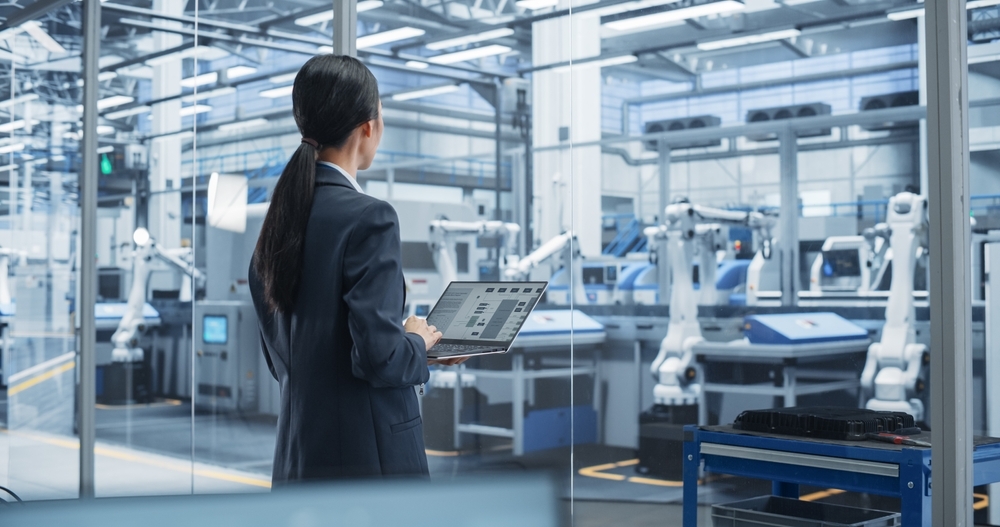
Smart factories are no longer just a construct of the future - they have become the cornerstone of modern manufacturing. A 2025 Bitkom Research shows that 71 percent of companies already use Industry 4.0 technologies in their factories, with digital marketplaces, digital twins and IoT platforms leading this trend.
While modernisation begins with these technologies, true transformation rests on the fusion of intelligence, connectivity and resilience that turns factories into adaptive, self-optimising ecosystems. Here are the 3 pillars of a smart factory delivering secure, seamless, and transformative production.
Driving Intelligence on the Factory Floor with AI
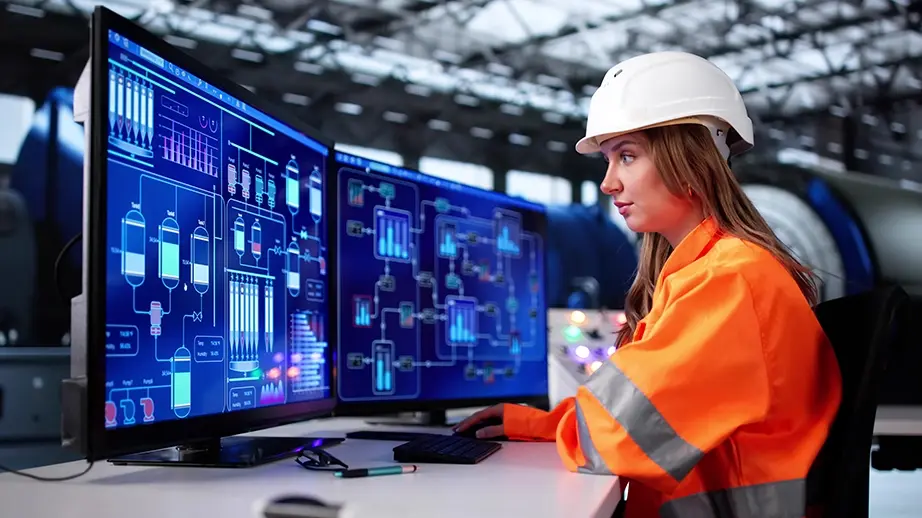
AI forms the intelligence layer that transforms smart factories from automated to truly autonomous. With thousands of sensors, machines, and robotics generating continuous streams of data, AI enables predictive analytics, automated quality control and adaptive production workflows. This intelligence drives benefits such as reduced downtime through predictive maintenance, improved product quality via real-time anomaly detection and optimised resource utilisation. By learning from historical and real-time data, AI empowers factories to make faster, smarter decisions - boosting efficiency and agility across operations.
AI also enables advanced robotics and collaborative systems that can adapt to changing production needs without manual intervention. From dynamic scheduling to self-learning algorithms, AI ensures that factories are not just connected but continuously improving.
Consider a smart factory producing automotive parts: conveyor belts and stamping machines equipped with sensors collecting data on temperature, speed and vibration – and feeding it to a central system. This system analyses patterns to predict failures, schedule maintenance proactively and adjust operations dynamically. For instance, the system might notice that a conveyor belt is moving slower than normal or that a stamping machine is beginning to overheat. By leveraging these insights, the factory prevents breakdowns, optimises performance and continuously improves workflows.
Unlike traditional manufacturing, this AI-first, data-driven approach ensures precision, responsiveness and resilience, thereby positioning smart factories for sustained competitiveness in an evolving industrial landscape.
At Tata Communications, we help manufacturers unlock the value of their operational data by connecting factory systems, enabling real-time data flows and putting AI-driven insights directly in the hands of the people who need them. Rather than building complex infrastructure in-house, our customers benefit from faster time-to-insight, more reliable equipment uptime and the ability to continuously improve production performance – with Tata Communications managing the underlying complexity end to end.
Bringing the Cloud Closer to the Factory with Edge Computing
To realise the true potential of AI, decisions need to happen instantly at the point of action. Edge computing brings processing power closer to the factory floor, eliminating latency and reducing reliance on centralised cloud systems.
In a smart factory, where milliseconds matter, edge infrastructure ensures real-time responsiveness for critical tasks such as machine control, safety monitoring and robotics coordination. This localised processing delivers benefits like faster decision-making, improved resilience against network disruptions and optimised bandwidth usage, making operations more efficient and cost-effective.
By enabling data processing at the edge, factories can act on insights instantly rather than waiting for cloud-based analysis. This is crucial for applications like predictive maintenance, automated quality checks and adaptive workflows that require immediate action. Edge computing not only accelerates decision-making but also enhances security and compliance by keeping sensitive data closer to its source. Together with AI, it forms the backbone of a truly intelligent and agile manufacturing ecosystem.
Tata Communications works with manufacturers to bring processing power closer to where decisions need to happen – on the factory floor itself. By combining our global network expertise with edge infrastructure, we help customers eliminate the latency that slows down critical operations, reduce their dependence on centralised cloud systems and keep sensitive production data secure. The result is a factory environment that can respond in real time, stay operational even during network disruptions, and scale intelligently as production demands evolve.
Convergence of Operational Technology (OT) and Information Technology (IT)
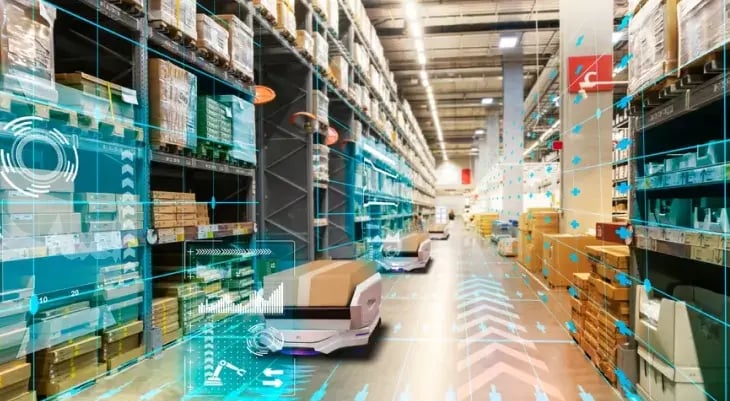
The convergence of OT and IT is a critical pillar of the smart factory, enabling seamless integration between physical production systems and digital platforms. Traditionally, OT systems operated in isolation, with machines running independently on wired networks within a single factory floor. This limited exposure meant minimal security risks and restricted data-driven insights.
Today, the modern smart factory is hyper-connected, leveraging tablets, handheld devices, and cloud-based applications for real-time monitoring and control. This transformation delivers significant benefits such as improved operational efficiency, faster decision-making, and enhanced flexibility in managing production lines. However, it also demands a robust wireless ecosystem capable of overcoming industrial challenges like metal structures that block radio waves and electrical interference that disrupts signals. Achieving this requires a partner like Tata Communications with deep domain expertise in managing the right mix of technologies - such as private 5G, industrial-grade Wi-Fi and edge computing - tailored to specific industry needs.
Additionally, by exposing operational systems to external networks, manufacturers face heightened cybersecurity risks and potential vulnerabilities to cyberattacks. This makes the implementation of strong security policies and governance frameworks essential. When done right, IT/OT integration brings tangible benefits: improved cyber resilience, compliance with industry standards, and the ability to safeguard sensitive production data while enabling advanced capabilities like predictive maintenance, real-time analytics, and autonomous operations.
At Tata Communications, we help manufacturers securely navigate the complexity of connecting legacy operational systems with modern digital platforms without disrupting production. Drawing on deep expertise in industrial connectivity and cybersecurity, we design and manage the network and security layers that make IT/OT convergence practical and resilient. Customers gain the visibility, control and protection they need to modernise with confidence, knowing their critical assets and production data remain safeguarded at every step.
Each of these pillars drives the transformation of manufacturing, strengthening competitiveness, resilience and environmental responsibility. The challenges – ranging from economic pressure and regulatory uncertainties to technological complexity - are significant, yet the opportunities are event greater. By investing in innovation and building intelligent and connected factories, the German manufacturers can not only maintain leadership but also set a benchmark for global industrial transformation. The future is clear: manufacturing must be smart, sustainable, and agile.
Discover how Tata Communications helps manufacturers build secure, intelligent and connected factories. Schedule a Conversation