


Key takeaways Agentic AI represents the next stage of automation where systems interpret goals, analyse information, and complete workflows across multiple platforms...
AI agents vs agentic AI: Use cases and applications compared
Key takeaways
-
AI agents are task-focused systems that follow predefined rules to automate routine activities such as scheduling, chat support, and workflow automation.
-
Agentic AI focuses on goal-driven automation, enabling systems to analyse situations, plan actions, and adapt while completing complex tasks.
-
The key difference lies in autonomy, learning ability, and task complexity.
-
Many organisations combine both technologies to automate routine work while enabling intelligent decision-making.
Introduction to AI agents vs agentic AI
Conversations about artificial intelligence increasingly include the comparison of AI agents vs agentic AI. While the terms may appear similar, they describe different ways technology supports people and businesses. Understanding what AI agents and agentic AI are helps organisations recognise how automation is evolving. Each approach solves problems differently, and together they are shaping how digital tools assist work, services, and decision-making.
What are AI agents? Definition and overview
AI agents can be thought of as digital assistants designed to perform particular tasks once they receive an instruction.
In most cases, they work within defined boundaries and follow programmed rules rather than making independent decisions.
Common characteristics include:
-
Task-specific automation: AI agents complete focused activities such as scheduling meetings or responding to queries.
-
Rule-guided operation: Their behaviour follows predefined logic or instructions.
-
Human-initiated actions: Most processes begin when a user gives a command or request.
-
Reliable repetition: Tasks can be performed consistently without variation.
-
Limited adaptability: They function best when workflows are predictable.
In simple terms, AI agents support productivity by taking over routine digital work.
What is agentic AI? Definition and core concepts
Agentic AI describes systems designed to pursue goals more independently and respond to situations as they unfold.
Rather than simply executing commands, these systems interpret information, choose possible actions, and improve over time through experience.
Key ideas behind agentic systems include:
-
Goal-driven processes: The system focuses on outcomes rather than individual instructions.
-
Continuous learning: Behaviour evolves based on feedback and results.
-
Autonomous reasoning: Different options can be evaluated before action is taken.
-
Adaptability: Strategies change when environments shift or new information appears.
-
Multi-step planning: Complex tasks are broken into smaller actions handled automatically.
This is why discussions about agentic AI vs. AI agents often revolve around the level of independence each system has.
Learn how unified customer experience platforms help streamline engagement, improve response times, and drive stronger business results.
Key differences between AI agents and agentic AI
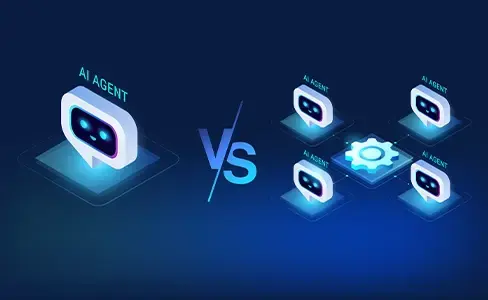
The comparison of AI agents vs agentic AI largely comes down to how much freedom each system has to act.
Important distinctions include:
-
Autonomy: AI agents respond to instructions, whereas agentic AI determines actions independently.
-
Decision capability: Agentic systems analyse situations before choosing a response.
-
Learning ability: AI agents generally rely on fixed logic; agentic AI improves with experience.
-
Complexity of tasks: AI agents handle routine work, while agentic AI manages dynamic problems.
-
Operational scale: AI agents perform single tasks, whereas agentic AI can oversee broader processes.
These differences highlight why organisations evaluate agentic AI and AI agents separately when planning automation strategies.
Use cases of AI agents in real-world applications
AI agents are already embedded in many everyday tools, often working quietly in the background.
Some common real-world examples include:
-
Voice assistants: Siri and Google Assistant help users set reminders, check weather updates, or search for information.
-
Customer support chatbots: Many businesses use automated chat systems to answer common queries quickly.
-
Email writing tools: Gmail Smart Compose suggests phrases to help people complete messages faster.
-
Programming assistants: GitHub Copilot offers developers suggestions while writing code.
-
Workflow automation: Businesses automate scheduling, document processing, and internal approvals.
These examples show how agentic AI vs. AI agents differ in complexity, with traditional agents focused on structured tasks.
Use cases of agentic AI across industries
Agentic AI use cases appear most often in environments where conditions change constantly and decisions must be made quickly.
Examples across industries include:
-
Autonomous transport: Self-driving vehicles analyse traffic conditions and make driving decisions.
-
Warehouse robotics: Intelligent machines organise inventory and navigate facilities without constant direction.
-
Cybersecurity monitoring: Systems identify unusual network behaviour and respond to threats in real time.
-
Healthcare insights: Large medical datasets are analysed to support treatment planning and research.
-
Supply chain coordination: Systems anticipate disruptions and adjust logistics plans automatically.
These applications demonstrate how agentic AI and AI agents serve different but complementary purposes.
How AI agents and agentic AI complement each other
Although often compared, agentic AI vs. AI agents are increasingly used together rather than separately.
Their combined use offers several advantages:
-
Layered automation: AI agents manage simple tasks while agentic systems address complex decisions.
-
Improved efficiency: Workflows run more smoothly when routine and strategic processes are separated.
-
Scalable technology: Organisations can start with simple agents and gradually adopt more advanced systems.
-
Human support: Employees receive assistance both with everyday tasks and deeper analysis.
-
Integrated digital ecosystems: Many modern platforms incorporate both technologies.
Understanding what AI agents and agentic AI are, therefore, helps businesses design more balanced technology strategies.
Our Customer Interaction Tool helps you assess engagement performance, identify gaps and improve customer experiences across every touchpoint.
Challenges and considerations when using AI agents vs agentic AI
While the benefits are clear, organisations must also address important challenges when adopting these technologies.
Key considerations include:
-
Workforce adjustments: Automation may change the nature of certain roles.
-
Responsibility and accountability: It can be difficult to determine who is responsible for automated decisions.
-
Data protection: Systems often rely on large volumes of sensitive information.
-
Transparency: Users expect clear explanations of how automated outcomes are produced.
-
Technical integration: Advanced systems require strong infrastructure and governance.
Addressing these concerns ensures responsible use of AI agents vs agentic AI technologies.
Future trends in AI agents and agentic AI
The development of intelligent systems continues to move quickly, and several trends are shaping what comes next for agentic AI and AI agents.
Important developments include:
-
Greater autonomy: Agentic systems will manage increasingly complex processes.
-
More personalised services: Customer experiences will become more tailored through real-time data analysis.
-
Deeper enterprise integration: AI will connect more closely with business software and cloud platforms.
-
Human-technology collaboration: Digital assistants will work alongside professionals rather than replacing them.
-
Expansion across industries: Healthcare, finance, retail, and logistics will continue to adopt these tools.
These trends highlight the growing relevance of agentic AI and AI agents in modern digital ecosystems.
How Tata Communications leverages AI agents and agentic AI for business impact
Tata Communications applies these technologies through its customer experience platform to help businesses create more meaningful customer engagement. The platform brings together conversational intelligence and industry-ready solutions, with more than 150 AI agents designed for sectors such as banking, retail, and travel. It enables automation across customer journeys, including identity verification and booking management. By combining agentic AI vs AI agents, Tata Communications helps organisations improve conversions, strengthen retention, and continuously refine communication strategies through smarter, data-driven interactions.
Conclusion: Choosing between AI agents vs agentic AI for your needs
The discussion around AI agents vs agentic AI ultimately reflects two different approaches to automation. AI agents are well-suited for repetitive, clearly defined activities, while agentic AI handles situations that require reasoning and adaptability.
For many organisations, the most effective strategy involves combining both technologies. When used together, agentic AI and AI agents create systems that improve efficiency, support better decisions, and help businesses adapt to changing digital environments.
Speak with our experts to understand how Tata Communications can help you implement scalable solutions powered by AI agents and agentic AI. Schedule A Conversation
FAQs on AI agents vs agentic AI
What are the best use cases for agentic AI?
Agentic AI is most effective in environments where systems must analyse information continuously and respond independently. Examples include autonomous vehicles, cybersecurity monitoring, supply chain optimisation, and advanced healthcare analytics.
What is the difference between agent assist and agentic AI?
Agent assist tools help humans complete tasks more efficiently by offering suggestions or information. Agentic AI systems operate more independently, analysing situations and deciding what actions should be taken.
Who are the Big 4 AI agents?
There is no officially recognised “Big 4” category. However, commonly used AI agents include digital assistants such as Siri and Google Assistant, along with other automated systems designed to assist with everyday tasks.
What is the difference between AI/ML and agentic AI?
Artificial intelligence and machine learning are broad technological fields used to build intelligent systems. Agentic AI represents a specific application of those technologies, focusing on systems capable of pursuing goals, making decisions, and adapting to new situations.
Related Blogs
Know how your customer interactions perform and identify gaps to improve engagement and business value
Related Blogs
Know how your customer interactions perform and identify gaps to improve engagement and business value
Explore other Blogs
Key takeaways LLMs generate text based on prompts and are best suited for tasks like summarisation, translation, and drafting responses. Agentic AI focuses on completing...
Key takeaways Agentic AI systems can interpret goals, plan tasks, interact with enterprise systems, and complete workflows autonomously across platforms. Key industry...
What’s next?
Experience our solutions
Engage with interactive demos, insightful surveys, and calculators to uncover how our solutions fit your needs.
Exclusively for You
Get exclusive insights on the Tata Communications Digital Fabric and other platforms and solutions.