


Key takeaways CRM (Customer Relationship Management) manages customer data such as contact details, purchase history, and interaction records to help teams organise...
CX in retail: Improving customer experience across stores
Key takeaways
-
Customer experience in retail (CX) focuses on creating seamless journeys across online platforms, mobile apps, and physical stores so customers receive consistent service at every touchpoint.
-
Strong retail CX builds loyalty, improves engagement, and helps brands compete with digital-first retailers.
-
Strategies such as omnichannel shopping, experiential stores, faster checkout, and personalised offers improve customer satisfaction.
-
Technologies like analytics, mobile apps, conversational tools, and unified engagement platforms enable modern retail CX.
Retail has changed dramatically in the past decade, and the pace of change continues to accelerate. Shoppers today move easily between websites, mobile apps, and physical shops, expecting the same quality of service everywhere they go. Because of this shift, customer experience in the retail industry has become one of the most important factors influencing where people choose to shop. Strong experience makes customers feel understood and valued, while poor experience pushes them towards competitors almost instantly. Businesses that prioritise CX in retail are focusing on creating seamless journeys that connect digital convenience with the personal touch of physical stores.
To set the stage, it's important to define what retail customer experience (CX) means in today's landscape.
Retail customer experience refers to the complete journey a customer has with a brand, from the first moment they hear about it to long after the purchase. It includes everything from online browsing and mobile shopping to visiting a shop and speaking with store staff.
For organisations focused on customer experience in retail stores, every interaction matters. A shopper may see an online advert, research the product in an app, visit a store to examine it, and then complete the purchase digitally. The goal of CX in the retail industry is to ensure that each step feels connected and effortless, so customers never feel confused or inconvenienced.
Why retail customer experience matters
Retailers today face intense competition from both traditional brands and digital-first businesses. Online-only companies often provide quick delivery, personalised offers, and highly responsive service, raising the standard for everyone in the market.
Because of this, customer experience in the retail industry is a major competitive advantage. Customers are more likely to stay loyal to brands providing helpful service, smooth transactions, and consistent communication. Price alone rarely builds lasting loyalty. When customer experience in retail is managed well, customers return because they know the experience will consistently meet their expectations.
Understand CDP vs CRM, key differences, use cases, and how each platform manages customer data to improve personalisation and customer experience strategies.
Core pillars of effective retail customer experience
Effective CX in the retail industry depends on several key pillars that influence how customers interact with a brand throughout their shopping journey.
-
Understanding customers: Retailers must analyse behaviour and preferences to deliver products, promotions and services that match real customer needs rather than generic messaging.
-
Clear brand communication: Strong messaging helps brands express their values while ensuring marketing remains relevant and meaningful to their audience.
-
Integrated shopping journey: Connecting digital and physical channels ensures customers enjoy a seamless experience wherever they choose to shop.
-
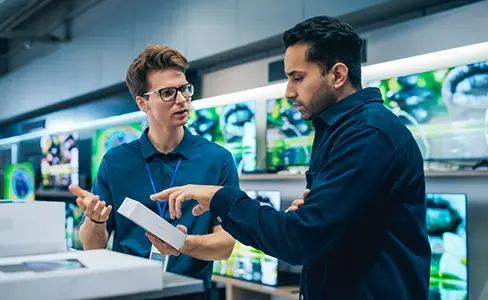
Strong in store service: Skilled staff play a vital role in improving customer experience in retail stores by assisting customers quickly and confidently.
In-store CX strategies that drive engagement and loyalty
Retailers are adopting innovative store strategies to enhance customer experience in retail stores and encourage stronger engagement with shoppers.
-
Buy online, collect in store: This service allows customers to purchase products digitally and pick them up at a nearby store, combining convenience with physical accessibility.
-
Experiential retail: In-store demonstrations, workshops and product trials give shoppers hands-on interaction, creating memorable customer experience examples in retail.
-
Faster checkout systems: Self-service kiosks and digital payment solutions reduce waiting times and simplify purchases.
-
Smart store layouts: Clear navigation and well-organised displays make shopping easier, improving overall CX in retail industry satisfaction.
Omnichannel experiences bridging physical and digital retail CX
Modern shoppers rarely rely on a single channel when making purchases. A person might research a product online, compare prices through a mobile phone, and then visit a store to complete the purchase.
To enable this behaviour, retailers are increasingly implementing unified commerce models. These platforms seamlessly integrate product information, customer data, and inventory management across all channels.
When this approach is implemented effectively, customers experience a consistent journey whether they shop online or in person. These connected experiences are among the most effective retail customer experience examples, demonstrating how brands can create seamless transitions between digital and physical environments.
Are your customer interactions delivering real value? Find gaps and unlock smarter ways to improve every customer touchpoint.
Leveraging data and analytics to personalise retail CX
Personalisation is becoming one of the most powerful ways to improve cx in the retail industry. Retailers can now gather insights from websites, loyalty programmes, mobile applications, and store visits to better understand their customers.
This information is often managed through retail customer experience software, which brings data together from different sources and creates unified customer profiles. With this knowledge, retailers can recommend products based on past purchases, suggest relevant offers, and communicate with customers at the right moment.
By using these insights effectively, businesses enhance customer experience in the retail industry and make interactions more personal and engaging.
Technology supporting retail customer experience
Technology plays a vital role in improving CX in the retail industry by making shopping faster, easier and more interactive for customers.
-
Mobile shopping apps: Retail apps allow customers to browse products, track orders, and receive personalised offers, improving overall customer experience in the retail industry.
-
Conversational support tools: Chat-based assistance helps shoppers quickly find answers while browsing online stores.
-
Augmented reality experiences: Customers can visualise products in real environments before purchasing, creating engaging customer experience examples in retail.
-
Retail technology platforms: Modern retail customer experience software connects data, communication and engagement tools to create smoother, more convenient shopping journeys.
How Tata Communications supports retail customer experience transformation
Tata Communications provides technology that helps retailers improve the customer experience through connected communication and engagement platforms.
The Customer Experience Platform allows businesses to interact with customers through messaging channels such as SMS, WhatsApp, and voice. Retailers can use these tools to send order updates, personalised offers, and reminders that encourage repeat purchases.
By connecting customer data with communication channels, the platform helps businesses create more relevant interactions. This approach allows brands to strengthen loyalty while improving efficiency across their customer engagement operations.
Conclusion: Elevating retail customer experience
Retail success increasingly depends on how well businesses understand and serve their customers. Shoppers today expect experiences that are convenient, personalised, and consistent across every interaction.
Focusing on CX in the retail industry allows organisations to build stronger relationships with customers while standing out in a crowded marketplace. When retailers invest in better service, smarter technology, and connected journeys, they transform ordinary shopping trips into meaningful brand experiences.
Businesses that prioritise customer experience in retail stores and adopt modern retail customer experience software will be better prepared to adapt to future changes in consumer behaviour.
Know how advanced engagement platforms can strengthen customer experience in the retail industry and help you deliver seamless interactions across every channel. Schedule A Conversation
FAQs on retail customer experience
What are the four Ps of customer experience?
The four Ps commonly refer to people, processes, products, and policies. These elements help businesses design and manage a strong customer experience (CX) in their retail strategies.
What are the five E's of customer experience?
The five E's are often described as entice, enter, engage, exit, and extend. They represent the different stages of the customer journey in the retail industry.
What are the seven Ps of retail?
The seven Ps usually include product, price, place, promotion, people, process, and physical evidence, which together guide retail strategy and operations.
What are the five key CX metrics?
Retailers typically measure CX through indicators such as Customer Satisfaction Score, Net Promoter Score, Customer Effort Score, cart abandonment rate, and repeat purchase rate.
Related Blogs
Understand how AI can improve your customer interactions by enhancing response speed, personalisation, and service quality across every touchpoint
Related Blogs
Understand how AI can improve your customer interactions by enhancing response speed, personalisation, and service quality across every touchpoint
Explore other Blogs
Key takeaways A Composable CDP activates customer data primarily from an existing data warehouse instead of copying it into a new system. Its modular architecture...
Key takeaways CDP vs data warehouse compares two systems that manage business data differently. A CDP focuses on real-time customer engagement, while a data warehouse...
What’s next?
Experience our solutions
Engage with interactive demos, insightful surveys, and calculators to uncover how our solutions fit your needs.
Exclusively for You
Get exclusive insights on the Tata Communications Digital Fabric and other platforms and solutions.